Lines of Negotiation I,II, II
Matiland Regional Gallery, (AUS) 2014
IMOCA, Dublin, (IRE) 2014
Centre for Creative Practice, Dublin (IRE) 2014
Lines of Negotiation I
A Trio of Trespassers
Maitland Regional Gallery, NSW, Australia
A trio of Trespassers is an exhibition which alludes to the notion of dis-placement as an evolving and dissolving metaphor in the production of making art. Transforming in its nature, dis-placement finds form through each artists’s experience of migration as a concept, which reassesses the iconography of the Australian landscape as a means of identity to explore a renewed send of place from the position of ‘other’. The variety of each artist’s individual approach to finding ‘material form’ forecasts a fascinating inspiring, interdisciplinary visual response that explores praxis through the fusion of transient histories. It is from a position of structured opposition towards an inherent imperialist perspective that new visual conversation develop between artists, materials, time and space.


Lines of Negotiation I Trio of Tresspassers by Dr Darryl Bowes The proposed travelling exhibition, A Trio of Trespassers ‘examines some of the complex phenomena central to the act of migration’.[1] Annemarie Murland, Andy Devine and Kiera O’Toole are new ‘Australian’s’ whose art practices explore the experience of migration and its subsequent diasporas. Navigating between here and there, present and past, inside and out, praxis explores a fusion of transient histories. In their approaches to finding ‘material form’ the Trio’s visual observations are panoramic. Lying between identity and landscape, their tableaus converge as one, rather than from an inherited imperialist, cultural perspective. By reassessing displaced identities, Murland, Devine and O’Toole recreate representations that are transformative in their critique of cultural and social otherness in relation to terra australis. The resolve of the Trio is a contemporary visual response, which serves to renegotiate the enduring loss that is inherent to the evolving and dissolving experiences of migration. As the work travels between space and place, new identities are forged and geographical borders are reassessed, forecasting an inspiring and interdisciplinary material outcome.
[1] Darryl, Bowes, A Trio of Trespassers, Catalogue Essay of Exhibition: The University of Newcastle, Australia, 16 October – 1 November, 2010. 1
Lines of Negotiation : Three Artists, Six Lives
by
Dr Christian Messhaim-Muir
Senior Lecturer, University of Newcastle
What is your ancestry? I'm Welsh. Well, kind of. I recently learned that I'm descended from a long line of John, Ralph and Edward Messhams, stretching back ten generations to the earliest-recorded John Messham, born in Wales in 1680. But that's just tracing the limb of the tree with my surname. I am in equal proportion descended from people with the family names Dutton, Gittens, Harrison, Lumber, Taylor — the list goes on — and seventeenth-century John Messham is only one of 1,024 ancestors from ten generations ago. At least half of my ancestors are English. And now there are a few Australians, including me. It's complicated.
Interestingly, the 2011 Australian Census asked us all the same question when it introduced "What is your ancestry?" to its survey for the first time. The most-frequently identified ancestry in Australia is 'English' (7,238,500 or 36.1% of the population). The second-highest is 'Australian' (7,098,500, 35.4%) — you can see here how the question of ancestry very quickly becomes complicated. Third-highest is 'Irish', with 2,087,800 people (10.4% of the population).[1] The actual population of Ireland itself, according to their 2011 Census, is not much more: 4,588,252.[2]
The question on ancestry is a very tricky one, particularly for Australians. Unlike the question "where were you born?" or "what is your nationality?", ancestry isn't simply determined by documented fact; ancestry is about self-perception — how you identify and with whom. As the Australian Bureau of Statistics put it, reporting on the 2011 Census, "Ancestry is not necessarily related to a person's place of birth but is an indication of the cultural group that they most closely identify with."[3] In fact, the Census survey allowed respondents to choose up to two ancestries. With around one quarter of Australia's population born overseas,[4] cultural identity becomes all the more complex and layered.
The three artists in this exhibition, Trio of Trespassers, arrived into this context from countries that themselves are complexly entwined with Australia's post-settlement heritage — Annemarie Murland from Scotland, Andy Devine from England and Kiera O'Toole from Ireland. Compared to other migrant groups arriving in Australia, those of us with Anglo-Celtic ancestry have always had it easier: never having to learn a new language, or to try to understand customs and values alien to us, or to feel that we could never return to the place in which we were born. For us Gen X-ers who sought new lives in Australia, the worst tyrannies of distance were $1-a-minute phone calls home and the time lag of ten-day airmail letters. And since the internet and rise of social media, the distance is compressed in some very real ways.
But every migrant, regardless of where from, encounters some of the same experiences — the sense of displacement that never subsides, the becoming-estranged of your own accent, the psychological distance that grows as time progresses. We have two homes; we belong in both yet no longer fit entirely into either. When we return to where we were born, we don't see places as they appear now, to the people still living there; we see old memories from before we departed, left unchanged. Our lives are populated by two sets of family, two sets of friends, two stories, two versions of who we are. Our dreams are of places and people, some long gone, who are fixed back in time. This shared consciousness ties together the work of Murland, Devine and O'Toole. In their own different ways, each articulates the duality of migrant identity, the ambiguity in the word 'home', but also a questioning of what their ancestries might mean — Scottish, English, Irish or Australian. These three artists articulate their own experience in very different ways; but each gives a sense of what it is to be both blessed and cursed to have lived two lives in one lifetime.
Notes
[1] '2071.0 — Reflecting a Nation: Stories from the 2011 Census, 2012–2013', Australian Bureau of Statistics. Accessed 23 June 2014.
[2] 'This is Ireland: Highlights from the Census 2011, Part 1', Central Statistics Office. Accessed 23 June 2014.
[3] '2071.0 — Reflecting a Nation: Stories from the 2011 Census, 2012–2013', Australian Bureau of Statistics. Accessed 23 June 2014.
[4] Ibid.
Lines of Negotiation II, 2014,
Steambox, Irish Museum of Contemporary Art, Dublin
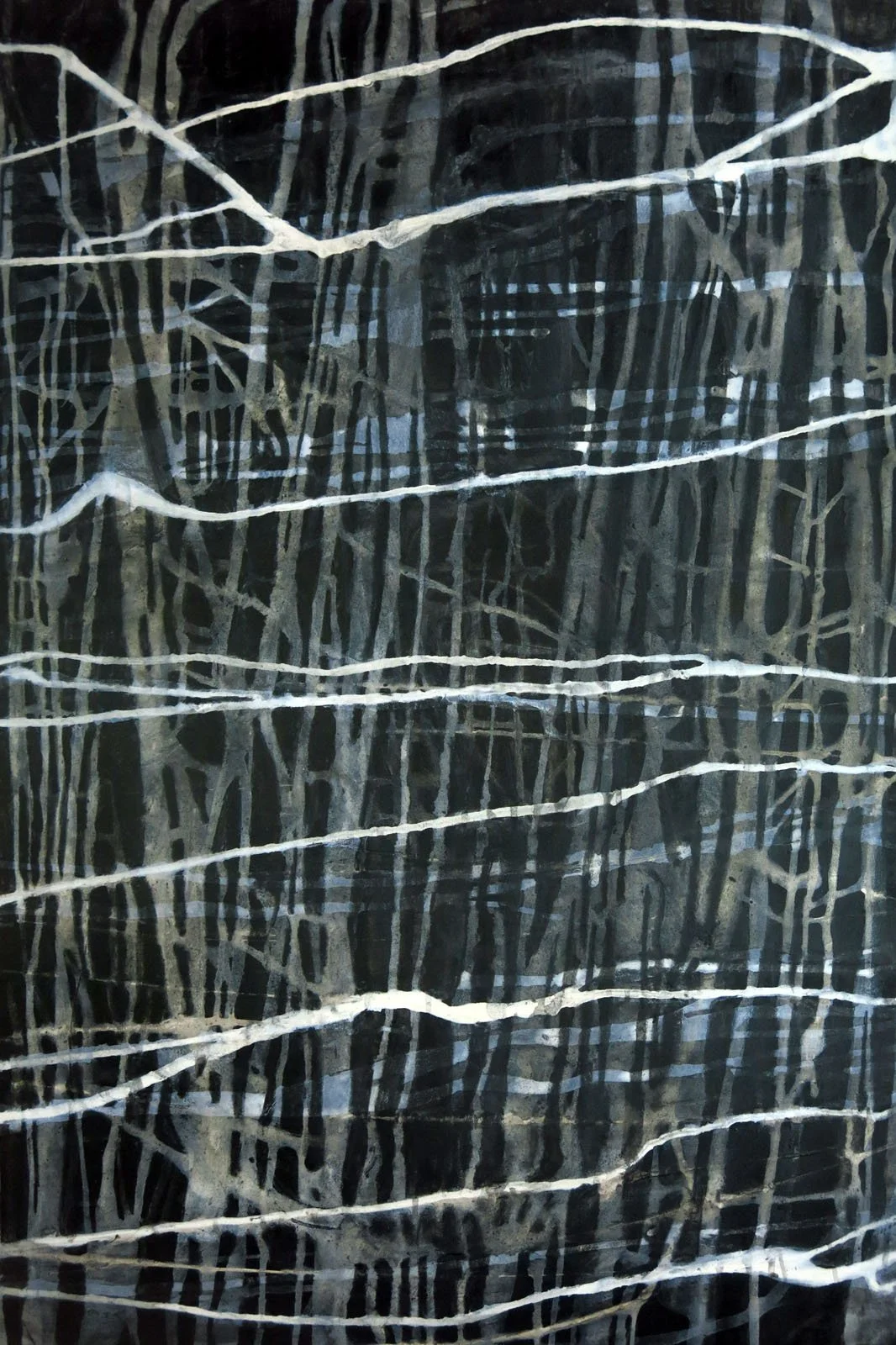

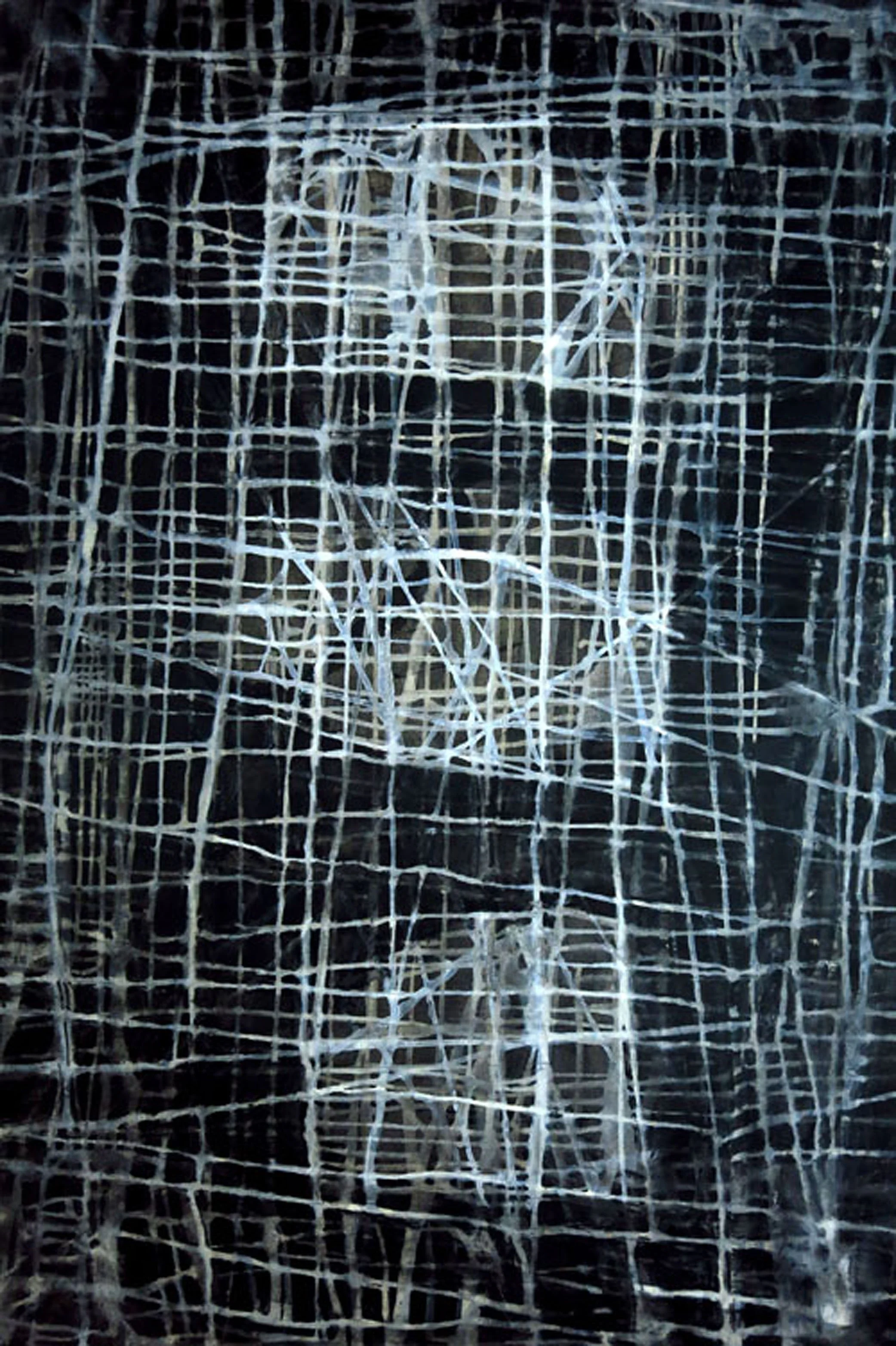
A note on IMOCA (Irish Museum of Contemporary Art). In 2010, IMOCA established a new opportunity for local artists in honour of a similar pursuit taken up by artists many years ago. In 1943, a group of artists rebelling at the closed, conservative, ‘tennis club’ institutions for art, decided to stand together and do something about it. The Irish Exhibition of Living Art, which was arguably sparked the atmosphere that allowed many or most of the opportunities available to Irish-based artists today- The Arts Council, Culture Ireland and the Percent For Art scheme, among others. The very nature of contemporary art has changed so much since the declaration of the name, ‘Living Art,’ that a current reading of it could easily confuse it as just performance-based work, although it originally was a reference to the simple fact that these artists were still living and producing work. By its dissolution in the 1980’s, The Irish Exhibition of Living Art had already exhibited a significant force on Irish art, and had successfully managed what many institutions fail to do- make way for newer memes and ideas. In 2010 the first New Living Art exhibition was launched, and included over 30 Irish artists. It was a celebration of, and a bridge between, the artists of the past who had the courage and drive to create their own opportunities when presented with no other alternative, and the artists who, today, are taking every opportunity that is now available.Kiera O’Toole, Lines on Negotiation, acrylic and crayon on paper. private collection Kiera O’Toole, Lines on Negotiation, acrylic and crayon on paper. private collection Kiera O’Toole, Lines on Negotiation, acrylic and crayon on paper. private collection